WHY MAKE IT
A little comfort, a lot of flavor.
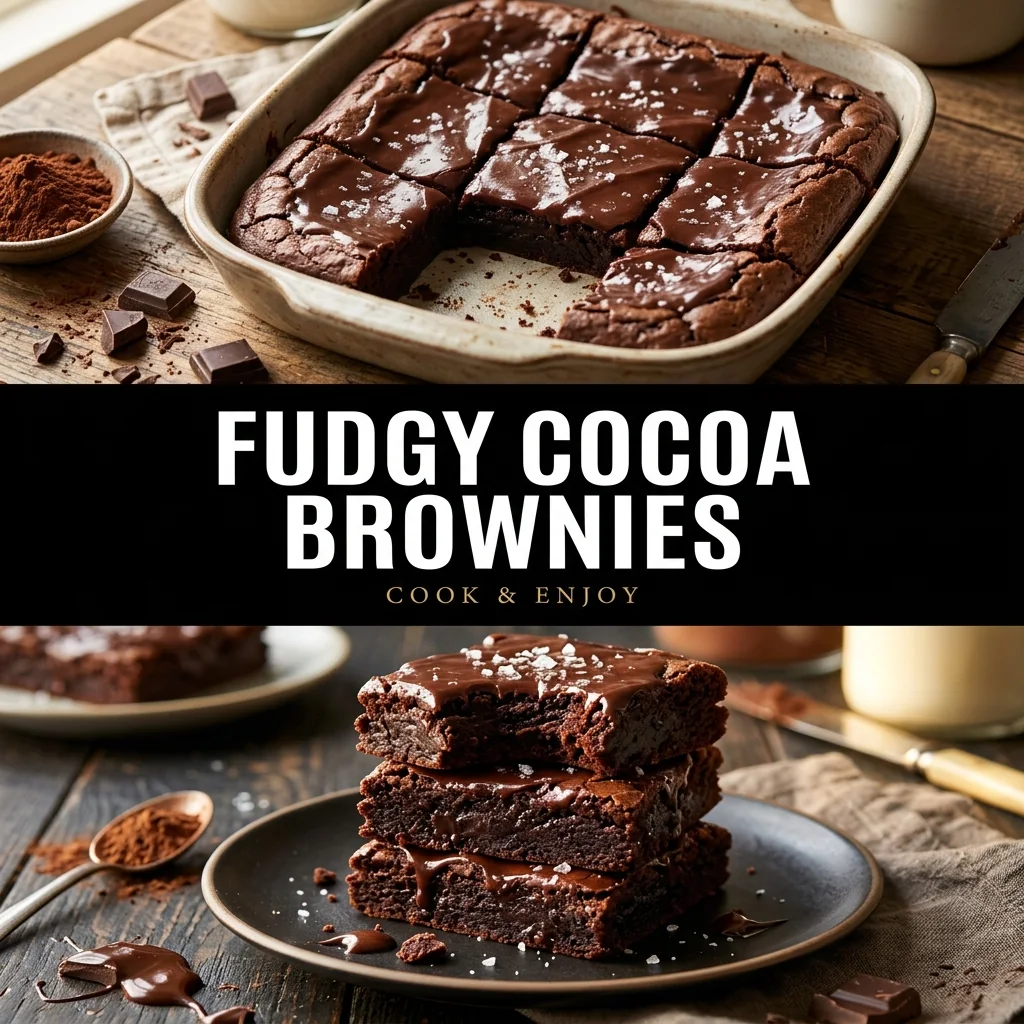
Baking exceptional brownies from pure cocoa powder rather than melted baking bars gives you complete control over fat and sugar ratios. Without the extra cocoa butter and lecithin found in solid chocolate, cocoa powder provides an undiluted, sharp cocoa intensity that creates an extraordinarily fudgy, bendable crumb. Browning the butter beforehand reintroduces nutty complexity and roasty aromatics, compensating for the lack of melted chocolate solids. The lower baking temperature of 325°F (165°C) prevents the outer perimeter from drying into a hard rim before the center has properly set. The result is a square with crisp corners, a delicate tissue-like crinkle on top, and an intensely decadent interior.
The Chemistry of the Crinkle Crust
That signature glossy, micro-thin skin across the top of a brownie is essentially a quick surface meringue. When you whisk whole eggs thoroughly into sugar suspended in warm fat, you dissolve the crystalline sugar into the egg whites' moisture while incorporating micro-bubbles of air. As the pan bakes in the oven, this delicate, sugar-dense egg film floats upward and dries against hot air currents. Skipping the vigorous beating step or substituting non-caloric granular sweeteners will completely prevent this glossy crust from developing, leaving behind a dull, matte exterior.
Metal Versus Glass Baking Pans
For brownies, the material of your baking vessel dictates the texture of your edges. Straight-sided, light-colored aluminum pans conduct thermal energy rapidly and evenly, allowing the batter to rise uniformly and set without overcooking the perimeter. Glass and ceramic dishes, by contrast, act as heat insulators; they take much longer to warm up and retain heat excessively once hot. Baking dense brownie batter in glass often results in overcooked, hard edges while the center remains raw. Always opt for an 8-inch metal pan for consistent heat transfer.
Mastering the Doneness Check
Determining doneness in cocoa brownies requires close sensory attention because chocolate dough provides no visual browning cues. Relying on a totally clean toothpick will invariably produce dry, cake-like squares. The ideal moment to pull the pan from the oven is when the top looks dry, slight shrinkage appears at the corners, and an inserted skewer emerges with thick, moist crumbs clinging along its length. If raw, runny batter coats the skewer, return the pan to the oven for two-minute increments until proper setting occurs.
Before you start
The coveted crinkly, paper-thin crust on brownies is not an accident; it is a thin meringue skin formed when dissolved sugar and whipped egg proteins rise to the top surface during the bake. To guarantee this result, beat the eggs vigorously into the warm butter-and-sugar mixture until the batter becomes glossy, smooth, and emulsified before folding in your flour. Do not reduce the granulated sugar, as sugar is structural.
THE RECIPE
Fudgy Cocoa Brownies
16 servings · 15 minutes preparation · 28 minutes cooking · 60 minutes cooling, chilling or resting
Ingredients
Step-by-step instructions
- Position a baking rack in the center of your oven and preheat to 325°F (165°C). Line an 8-inch square metal baking pan with crisscrossed sheets of parchment paper, leaving generous overhangs on all sides, and lightly grease the exposed parchment with cooking spray.
- Melt the butter in a medium saucepan over medium-low heat. Stir continuously for 3 to 5 minutes as the butter foams and crackles, watching closely until milk solids turn golden amber and give off a nutty aroma, then immediately remove the pan from heat.
- Whisk the granulated sugar, sifted cocoa powder, and fine table salt directly into the hot browned butter until combined; the mixture will look gritty, resembling wet sand, which helps dissolve the sugar granules during the subsequent cooling and mixing phase.
- Let the warm cocoa paste rest off heat for 5 minutes until warm rather than scalding. Crack in the cold eggs one at a time, whisking briskly and continuously after each addition for a full 90 seconds until the mixture shifts into a thick, glossy, ribbon-like batter.
- Blend in the pure vanilla extract. Sprinkle the all-purpose flour across the surface of the glossy cocoa batter, then switch to a stiff rubber spatula and fold vigorously for roughly 40 strokes until the flour completely incorporates and the batter pulls smoothly away from bowl sides.
- Fold in the semisweet chocolate wafers until evenly distributed. Transfer the glossy batter into the lined pan, using an offset spatula to push it into the corners and smooth the top into an even layer.
- Bake at 325°F (165°C) for 26 to 30 minutes, rotating halfway through. Remove when the surface is crackled and dull, the edges pull slightly away from the pan, and a wooden skewer poked into the center comes away with sticky crumbs, not wet liquid batter.
- Set the pan on a wire cooling rack and allow the brownies to settle for at least 60 minutes. Grasp the parchment tabs to pull the brownie square onto a cutting board, then slice into sixteen neat squares using a clean, sharp slicing blade.
Kitchen notes
The coveted crinkly, paper-thin crust on brownies is not an accident; it is a thin meringue skin formed when dissolved sugar and whipped egg proteins rise to the top surface during the bake. To guarantee this result, beat the eggs vigorously into the warm butter-and-sugar mixture until the batter becomes glossy, smooth, and emulsified before folding in your flour. Do not reduce the granulated sugar, as sugar is structural.
Storage & make-ahead
Store the cut brownies in a single layer or separated by sheets of parchment inside an airtight container at room temperature for up to 4 days. Brownies can also be refrigerated for up to 1 week, which enhances their dense chewiness. To freeze, wrap individual portions securely in plastic wrap and aluminum foil for up to 3 months; thaw wrapped squares at room temperature before eating.
An original recipe guide inspired by themes in our Pinterest research. Recipe has not been independently kitchen-tested. AI-generated image is illustrative; your finished dish may look different.
Frequently asked questions
Why should I use cold eggs with warm browned butter?
Cold eggs drop the temperature of hot butter safely, preventing the eggs from scrambling while providing sufficient viscosity to whip up a glossy, emulsified batter that holds the suspended cocoa solids without separating during baking.
Can I double this recipe for a 9x13-inch pan?
Yes, accurately double all ingredients and bake in a standard 9x13-inch metal baking pan at 325°F (165°C). The baking time will increase slightly to approximately 32 to 36 minutes; monitor moisture cues on a wooden skewer.
What happens if I use unsweetened natural cocoa powder instead?
Natural cocoa contains active fruit acids that lighten the color and produce a sharper, fruitier, more acidic chocolate flavor. It works structurally, but Dutch-process cocoa provides a darker color, deeper earthiness, and rounder fudge taste.