WHY MAKE IT
A little comfort, a lot of flavor.
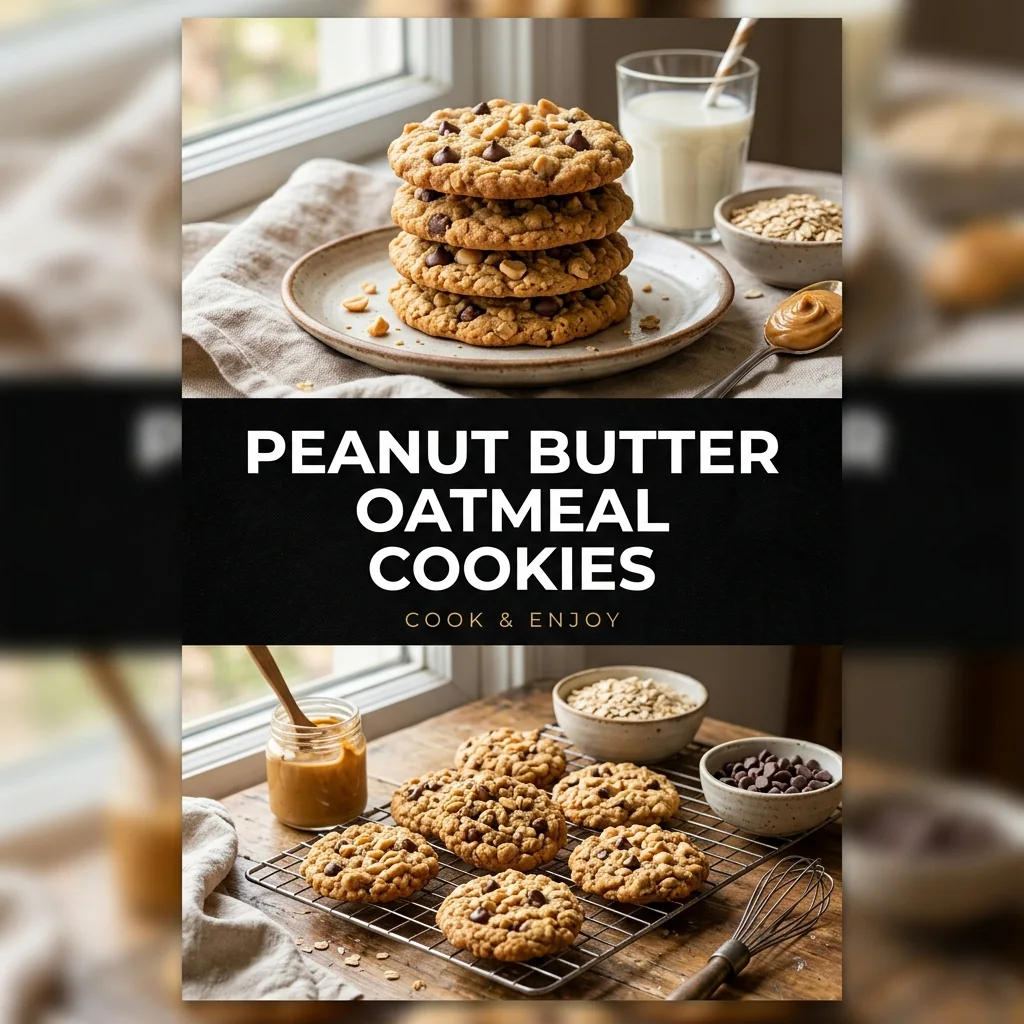
Combining the rich, roasted nuttiness of peanut butter cookies with the satisfying chew of an oatmeal cookie yields a sturdy, deeply flavorful treat. Oats provide essential structural complexity and fiber, which moderates the dense fat content of peanut butter. The moisture-retaining properties of brown sugar ensure a tender, pliable center, while granulated sugar promotes crisp, caramelized edges. A hint of ground cinnamon bridges the earthy grain notes with roasted peanut oils, elevating this hybrid cookie beyond everyday pantry fare into a bakery-caliber staple.
Choosing the Right Peanut Butter
The stability of commercial creamy peanut butter stems from hydrogenated vegetable oils that prevent oil separation. In baking, this consistency ensures that fat remains uniformly suspended throughout the dough matrix. Natural styles—containing solely peanuts and salt—readily separate at room temperature. When mixed into dough, this free oil breaks down the gluten web and causes cookies to pool and spread across the sheet pan, leaving scorched edges and dry, brittle interiors instead of a thick, chewy center.
The Role of Old-Fashioned Rolled Oats
Old-fashioned rolled oats consist of whole oat groats that have been steamed and flattened. Their larger surface area and intact bran absorb liquid gradually during mixing, resting, and baking. This gradual hydration controls dough spread and creates structural pockets that keep the cookie chewy long after baking. Instant or quick-cooking oats, by contrast, are chopped into smaller flakes and pre-gelatinized, which strips away moisture too rapidly and leaves the finished cookie dense, compact, and dry.
Proper Baking Cues for Maximum Chew
Peanut butter cookies easily overbake because their high fat content masks the appearance of doneness until the sugar starts scorching. Rely on edge cues rather than the appearance of the top center. The cookies should be pulled from the oven the moment the perimeters turn golden and dry to the touch, even if the center crisscrosses appear pale and fragile. Residual heat from the hot baking sheet continues cooking the centers during the five-minute resting phase.
Before you start
Use conventional, emulsified commercial peanut butter rather than natural, oil-separating varieties for this recipe. Natural peanut butter introduces erratic oil-to-solid ratios that cause cookies to spread excessively, turn greasy, or dry out into a crumbly texture. Ensure your oats are old-fashioned rolled oats; quick-cooking or instant oats absorb moisture too rapidly and lead to dry, stiff cookies.
THE RECIPE
Peanut Butter Oatmeal Cookies
20 servings · 15 minutes preparation · 12 minutes cooking · 20 minutes cooling, chilling or resting
Ingredients
Step-by-step instructions
- Preheat your oven to 350°F (177°C) and line two standard 18x13-inch rimmed baking sheets with parchment paper or silicone baking mats.
- Beat the softened butter, creamy peanut butter, light brown sugar, and granulated sugar in a stand mixer on medium-high speed for 3 minutes until smooth, lightened in color, and completely emulsified.
- Add the room-temperature eggs one at a time, beating for 30 seconds after each addition until thoroughly combined, then stir in the vanilla extract.
- Whisk together the all-purpose flour, old-fashioned rolled oats, baking soda, ground cinnamon, and fine sea salt in a medium bowl.
- Add the dry ingredient mixture to the wet peanut butter batter on low speed, mixing just until the flour streaks disappear, then fold in the chopped roasted peanuts with a rubber spatula.
- Refrigerate the mixed dough for 20 minutes to allow the oats to hydrate and firm the butterfat, which prevents excess spreading during baking.
- Scoop rounded 2-tablespoon portions of dough (about 45g each) onto the prepared baking sheets, spacing them 2 1/2 inches apart.
- Gently flatten each ball to 1/2-inch thickness using the tines of a fork dipped in flour, creating a traditional crisscross pattern across the top surface.
- Bake at 350°F (177°C) for 10 to 12 minutes until the edges are golden brown and dry while the centers remain soft, then cool on the pan for 5 minutes before transferring to a wire rack.
Kitchen notes
Use conventional, emulsified commercial peanut butter rather than natural, oil-separating varieties for this recipe. Natural peanut butter introduces erratic oil-to-solid ratios that cause cookies to spread excessively, turn greasy, or dry out into a crumbly texture. Ensure your oats are old-fashioned rolled oats; quick-cooking or instant oats absorb moisture too rapidly and lead to dry, stiff cookies.
Storage & make-ahead
Keep completely cooled cookies in an airtight container at room temperature for up to 6 days; place a small sheet of parchment paper between layers. To maintain chewiness, place a single piece of sandwich bread inside the container, which releases moisture to keep cookies soft. Dough balls can be scooped, flattened, frozen solid on a tray, and stored in a freezer bag for up to 3 months; bake directly from frozen at 350°F (177°C) for 12 to 14 minutes.
An original recipe guide inspired by themes in our Pinterest research. Recipe has not been independently kitchen-tested. AI-generated image is illustrative; your finished dish may look different.
Frequently asked questions
Can I use crunchy peanut butter instead of creamy?
Yes. Standard commercial crunchy peanut butter works seamlessly in an equal 1:1 ratio. If using crunchy peanut butter, you can omit the 1/3 cup of additional chopped peanuts to keep the total dough hydration and density balanced.
Why did my cookies turn out dry and crumbly?
Dry cookies usually stem from measuring flour and oats by scooping directly from the container with a cup, which packs excess dry ingredients. Weigh your ingredients with a kitchen scale, and ensure you do not bake past the 12-minute threshold.
Can I add chocolate chips or raisins to this dough?
Yes. You can fold up to 3/4 cup of semi-sweet chocolate chips, peanut butter chips, or seedless raisins into the dough alongside the chopped peanuts during step five without altering the baking time or temperature.