WHY MAKE IT
A little comfort, a lot of flavor.
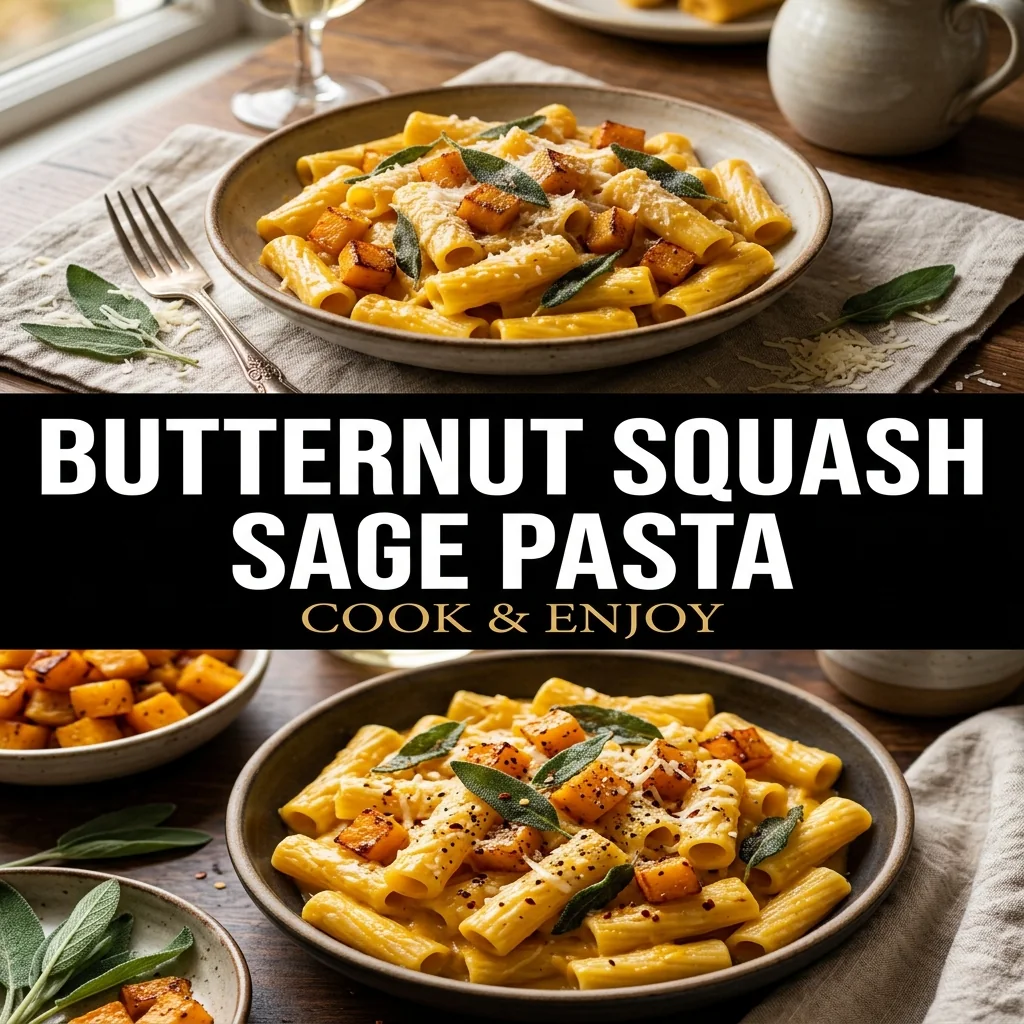
Butternut squash sage pasta captures the essence of autumnal comfort, marrying the natural, earthy sweetness of winter squash with the hazelnut depth of browned butter and the resinous perfume of crisp sage. While winter squash can sometimes yield a dense or cloying purée on its own, roasting the diced squash beforehand caramelizes its exterior and concentrates its sugars. When blended with savory vegetable broth, a touch of cream, and warm nutmeg, the purée transforms into an unctuous sauce with the texture of silk. Paired with sturdy, ridged rigatoni that traps the golden glaze both inside and out, this dish balances sweetness with salty Pecorino Romano and the delicate crunch of flash-fried herb leaves for a harmonious, satisfying dinner.
Roasting Squash for Maximum Flavor
Boiling or steaming butternut squash introduces surplus moisture that dilutes its flavor and yields a bland, watery sauce. High-heat oven roasting at 400 F (204 C) evaporates excess water while promoting Maillard browning across the squash edges. Cutting the vegetable into uniform 3/4-inch cubes ensures even cooking within twenty-five minutes without scorching. Leaving one-quarter of the roasted cubes whole rather than puréeing the entire batch introduces pleasant textural variation to the finished pasta, offering bursts of caramelized sweetness nestled alongside the ridged rigatoni tubes in every forkful.
The Role of Brown Butter and Fried Sage
Browning butter is an exercise in culinary alchemy where milk solids toast gently into aromatic, nutty particles. Cooking fresh whole sage leaves in the foaming butter accomplishes two goals simultaneously: it crisps the delicate herb leaves into an exquisite brittle garnish and perfumes the fat with woodsy, camphoraceous essential oils. Monitor the skillet carefully over medium heat, swirling occasionally. As soon as the foam subsides and tiny amber flecks appear on the pan bottom, remove the sage and reduce heat to prevent the delicate butter solids from burning into bitterness.
Emulsifying with Rigatoni and Pasta Water
Rigatoni is the ideal partner for a thick puréed vegetable sauce. Its expansive hollow core captures pools of sauce, while external ridges offer grip so the emulsion does not slide away. Starchy pasta water serves as the critical bridge between the vegetable purée and the browned dairy fat. Whisking pasta water into the skillet loosens the purée to a glossy, clinging consistency that coats pasta strands effortlessly. Finishing with Pecorino Romano provides a sharp, sheep-milk saltiness that balances the natural sugars of the squash.
Before you start
When blending hot roasted squash, vent the blender lid by removing its center cap and covering the opening with a folded clean kitchen towel. This allows steam pressure to escape safely without blowing the lid off your blender. If the purée appears too thick during blending, add extra warm vegetable broth one tablespoon at a time until the mixture reaches a smooth, velvety consistency similar to heavy cream.
THE RECIPE
Butternut Squash Sage Pasta
4 servings · 20 minutes preparation · 35 minutes cooking
Ingredients
Step-by-step instructions
- Preheat the oven to 400 F (204 C). Toss the cubed butternut squash with 2 tablespoons olive oil, 1/4 teaspoon salt, and 1/8 teaspoon black pepper on a large rimmed baking sheet, roasting for 25 minutes until caramelized and fork-tender throughout.
- Bring 4 quarts of generously salted water to a rolling boil in an 8-quart stockpot over high heat. Cook the rigatoni for 11 to 12 minutes until al dente, reserving 1 cup of starchy pasta water before draining the pasta in a colander.
- Let the roasted squash cool briefly. Transfer three-quarters to a heat-safe blender rated for hot foods, reserving the remaining cubes. Add broth, cream, and nutmeg and blend in small batches with steam vented according to the manufacturer instructions until smooth; alternatively use an immersion blender in a saucepan.
- Melt the unsalted butter in a wide 12-inch stainless steel skillet over medium heat. Once foaming, add the whole sage leaves in a single layer and fry for 1 to 2 minutes until crisp and darkened, transferring the fried sage leaves immediately to a paper towel-lined plate.
- In the same skillet containing the residual sage-infused butter, reduce the heat to medium-low. Add the diced shallots and minced garlic, sautéing for 2 to 3 minutes until translucent, fragrant, and soft without allowing the garlic to brown or turn bitter.
- Pour the blended butternut squash purée into the skillet, stirring to combine with the aromatics and nutty butter. Simmer gently over medium-low heat for 2 minutes until hot, seasoning with the remaining 1/4 teaspoon salt and 1/8 teaspoon black pepper.
- Add the drained rigatoni, reserved squash cubes, and 1/4 cup reserved pasta water into the skillet. Toss vigorously over low heat for 2 minutes until the sauce coats every tube, then fold in the grated Pecorino Romano cheese. Garnish with crisp sage leaves and serve warm.
Kitchen notes
When blending hot roasted squash, vent the blender lid by removing its center cap and covering the opening with a folded clean kitchen towel. This allows steam pressure to escape safely without blowing the lid off your blender. If the purée appears too thick during blending, add extra warm vegetable broth one tablespoon at a time until the mixture reaches a smooth, velvety consistency similar to heavy cream.
Storage & make-ahead
Cool leftover pasta completely and transfer to an airtight container within 2 hours of cooking. Refrigerate for up to 4 days. Because starch absorbs moisture as it sits, the squash sauce will thicken significantly when chilled. To reheat safely, transfer to a skillet over medium heat with a splash of broth or water, stirring gently until bubbling and the internal temperature reaches at least 165 F (74 C).
An original recipe guide inspired by themes in our Pinterest research. Recipe has not been independently kitchen-tested. AI-generated image is illustrative; your finished dish may look different.
Frequently asked questions
Can I use canned butternut squash or pumpkin purée?
Yes, you can substitute 15 ounces of pure canned squash or pumpkin purée. Sauté the canned purée in the skillet for 3 to 4 minutes to cook off raw vegetal flavors before stirring in the cream, broth, and seasonings.
What can I substitute for Pecorino Romano?
Parmigiano-Reggiano or Grana Padano are wonderful alternatives. Pecorino offers a sharper, saltier punch that counterbalances the sweet squash effectively, whereas Parmigiano-Reggiano brings a mellower, nutty richness that complements the browned butter beautifully.
Can I make this pasta gluten-free?
Yes. Substitute your favorite certified gluten-free rigatoni or penne made from corn, rice, or legumes. Cook the gluten-free pasta strictly according to package directions, testing for tenderness frequently to avoid mushiness before tossing with the sauce.