WHY MAKE IT
A little comfort, a lot of flavor.
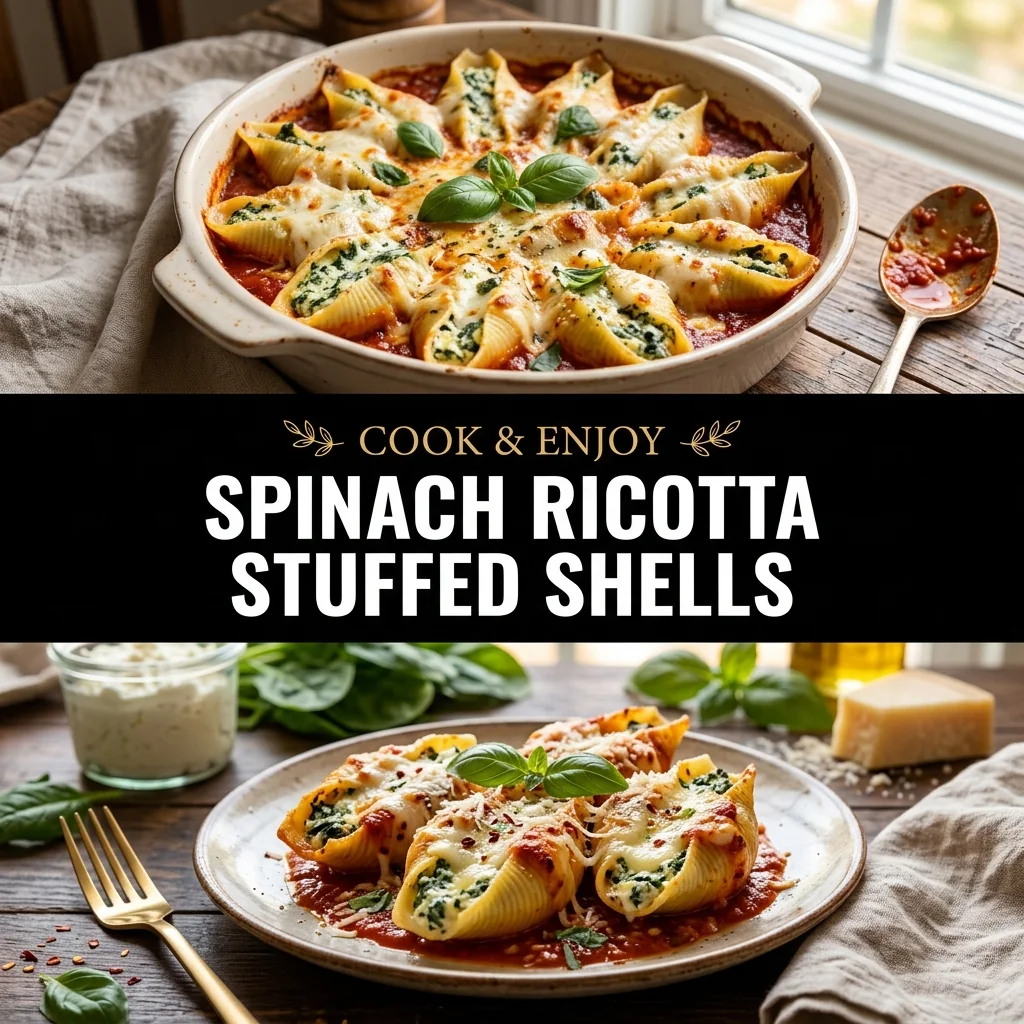
Spinach ricotta stuffed shells stand as one of the most beloved baked pasta traditions in Italian-American cuisine, offering layered textures of tender pasta, rich dairy, and savory tomato sauce. The secret to an exceptional filling lies in managing moisture: wet spinach and watery supermarket ricotta dilute flavor and turn the casserole soggy during baking. By wringing the thawed greens completely dry and choosing dense whole-milk ricotta bound with an egg and grated cheeses, the filling bakes into a firm, creamy custard with delicate herbal aromatics. Baked beneath a blanket of bright marinara sauce and bubbling low-moisture mozzarella, this oven-to-table centerpiece delivers comforting warmth, feeds a crowd effortlessly, and can be assembled ahead of busy weeknight dinners or festive weekend gatherings.
Managing Moisture in the Ricotta Filling
Water is the primary enemy of a structured stuffed shell filling. Commercial frozen spinach holds remarkable amounts of water within its fibrous cells, so wringing it inside a clean lint-free kitchen towel until no further droplets emerge is imperative. Similarly, inspect your whole-milk ricotta; if watery whey pools on its surface, drain it through a fine-mesh sieve lined with cheesecloth for 15 minutes before mixing. Incorporating a beaten egg binds the dairy proteins during baking, setting the filling into a cohesive, sliceable texture that holds its form inside each shell without slumping into liquid.
Cooking and Handling Jumbo Shells
Jumbo pasta shells are fragile and prone to tearing along their seams if handled carelessly or overcooked. Boil them in ample salted water for two to three minutes less than package directions indicate for al dente. This intentional undercooking ensures the pasta walls remain sturdy enough to handle piping pressure and allows them to absorb excess marinara juices in the oven without turning mushy. Rinsing the drained shells with cool tap water halts carryover cooking instantly and removes exterior starches so the shells separate easily on a baking sheet without sticking or ripping.
Layering, Baking, and Resting
Constructing the casserole properly prevents dry pasta edges and uneven baking. Spreading a generous layer of marinara across the dish bottom provides thermal insulation and prevents the shell bottoms from searing or hardening against hot glass. Nestling the filled shells tightly together minimizes air pockets, keeping the ricotta succulent. Baking under a tight foil shield for the first twenty-five minutes steams the pasta tender; removing the foil for the final ten minutes allows the mozzarella to bubble and brown attractively. Resting for ten minutes settles the cheeses before scooping.
Before you start
For fastest and cleanest assembly, transfer the ricotta filling into a heavy-duty gallon zip-top bag or pastry piping bag. Snip a 3/4-inch opening off one corner and squeeze the filling directly into the belly of each open shell. This method fills the shells in half the time required with a spoon, minimizes tearing of the tender pasta rims, and distributes an exact, uniform amount of cheese into every shell for even baking.
THE RECIPE
Spinach Ricotta Stuffed Shells
6 servings · 25 minutes preparation · 35 minutes cooking · 10 minutes cooling, chilling or resting
Ingredients
Step-by-step instructions
- Preheat the oven to 375 F (190 C) with the rack positioned in the center. Spread 1 cup of the marinara sauce evenly over the bottom of a 9-by-13-inch ceramic or glass baking dish to prevent the pasta shells from sticking or burning during baking.
- Bring 5 quarts of generously salted water to a boil in an 8-quart pot over high heat. Boil the jumbo shells for 9 minutes, stirring occasionally, until slightly undercooked and firm. Drain gently in a colander, rinse with cool water to halt cooking, and separate on a sheet pan.
- Wrap the thawed chopped spinach in a clean kitchen towel and wring out all moisture over the sink until dry to the touch. In a large mixing bowl, combine the dried spinach, whole-milk ricotta cheese, 1 cup of mozzarella, 1/2 cup of Parmesan, beaten egg, garlic, nutmeg, salt, and pepper.
- Stir the filling mixture thoroughly with a silicone spatula until the cheese, egg, and spinach are uniformly integrated. Spoon the filling into a large disposable piping bag with the tip snipped off, or prepare a standard tablespoon to fill the cooked shells carefully without tearing them.
- Pipe or spoon approximately 2 to 3 tablespoons of the spinach-ricotta filling into each cooked jumbo shell. Arrange the filled shells snugly in the prepared baking dish in single-layer rows, nested closely against one another with the open filling facing upward.
- Spoon the remaining 2 cups of marinara sauce evenly over and around the filled shells, leaving portions of the filling exposed. Scatter the remaining 1 cup of mozzarella and 1/4 cup of Parmesan cheese across the top surface of the assembled pasta casserole.
- Cover the baking dish tightly with aluminum foil and bake at 375 F (190 C) for 25 minutes. Uncover and bake for an additional 10 minutes until the cheese is melted, golden brown, bubbly, and the filling registers 160 F (71 C). Rest for 10 minutes before garnishing with parsley.
Kitchen notes
For fastest and cleanest assembly, transfer the ricotta filling into a heavy-duty gallon zip-top bag or pastry piping bag. Snip a 3/4-inch opening off one corner and squeeze the filling directly into the belly of each open shell. This method fills the shells in half the time required with a spoon, minimizes tearing of the tender pasta rims, and distributes an exact, uniform amount of cheese into every shell for even baking.
Storage & make-ahead
Refrigerate leftovers within 2 hours of baking. Store the covered baking dish or transfer portions to an airtight container in the refrigerator for up to 4 days. Reheat individual portions in an oven preheated to 350 F (177 C) covered with foil until the internal temperature reaches 165 F (74 C), roughly 20 minutes. You can also assemble and cover the unbaked casserole up to 24 hours in advance, adding 5 to 10 minutes to the covered baking time.
An original recipe guide inspired by themes in our Pinterest research. Recipe has not been independently kitchen-tested. AI-generated image is illustrative; your finished dish may look different.
Frequently asked questions
Can I use fresh spinach instead of frozen chopped spinach?
Yes, you can substitute 1 pound of fresh baby spinach. Sauté the leaves in a dry skillet over medium heat until completely wilted, let cool completely, and squeeze out all moisture in a towel before chopping finely and adding to the ricotta.
Can I freeze this dish before or after baking?
Yes. Freeze the assembled, unbaked casserole tightly wrapped in plastic wrap and heavy foil for up to 2 months. Thaw overnight in the refrigerator before baking as directed, adding 10 minutes to the covered baking time to heat through to 165 F (74 C).
Why did my filling turn watery during baking?
Watery filling almost always stems from insufficiently drained spinach or wet part-skim ricotta. Ensure you wring the thawed greens until bone-dry in a kitchen towel and choose thick whole-milk ricotta, straining any standing whey through a fine sieve before assembling.