WHY MAKE IT
A little comfort, a lot of flavor.
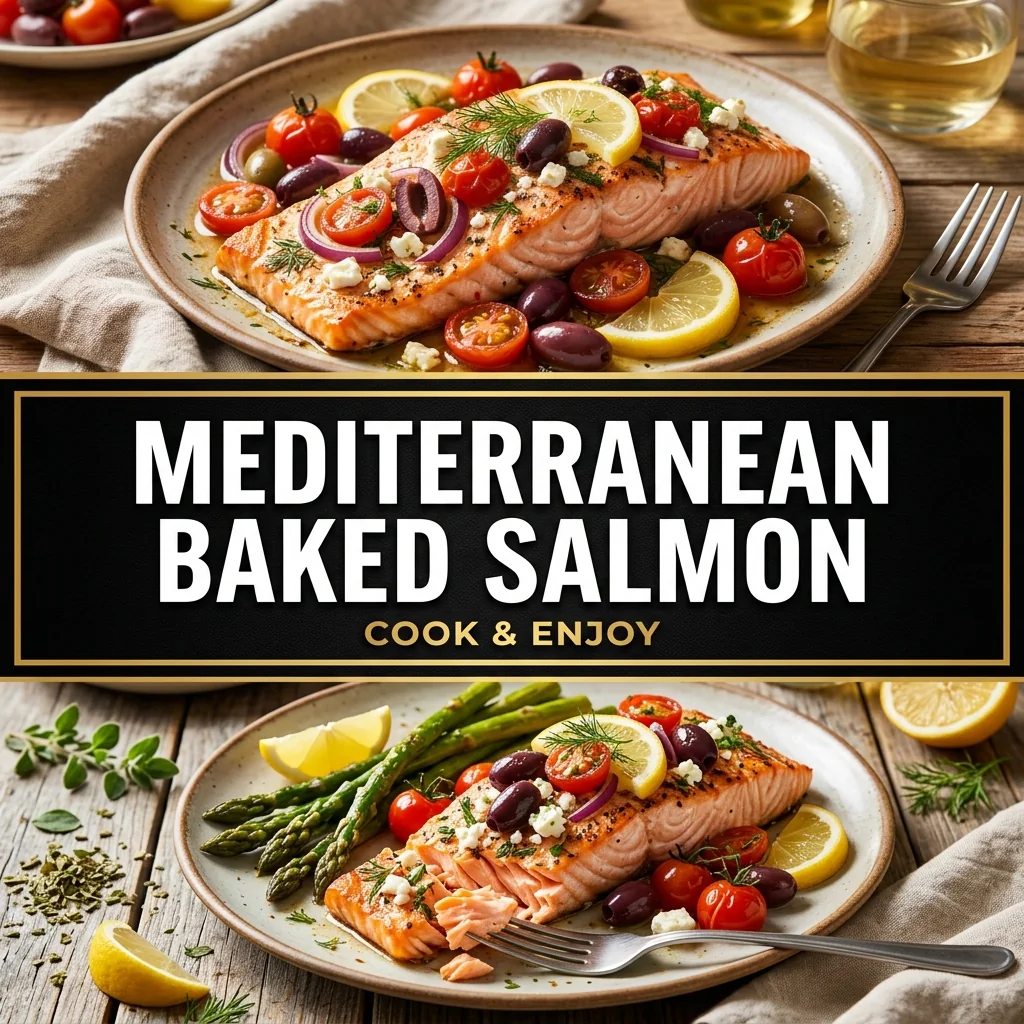
Mediterranean baked salmon highlights the culinary wisdom of pairing rich, oily fish with assertive acidic and savory accents. Salmon naturally possesses a high concentration of beneficial fats, making it exceptionally resilient to oven roasting. By surrounding individual fillets with bursting sweet cherry tomatoes, brine-cured Kalamata olives, piquant capers, and aromatic red onion, you create a self-basting environment inside the baking dish. As the vegetables roast at four hundred degrees, their juices release and mingle with the rendered salmon oils, producing an effortless pan sauce infused with garlic and oregano. The addition of tangy feta adds a creamy, salted contrast that elevates a straightforward weeknight supper into a celebratory meal.
The Importance of Quality Salmon Fillets
Center-cut fillets with uniform thickness yield the most predictable results in the oven, preventing thin tail sections from drying out before the thick center reaches doneness. Skin-on salmon provides an insulating barrier against direct dish heat, preserving moisture within the delicate underside of the fish. Whether utilizing wild King, Sockeye, or responsibly farmed Atlantic salmon, ensure the flesh is vibrant, firm to the touch, and free of unpleasant fishy odor. Patting the surface dry guarantees proper absorption of the olive oil and dried herbs, enhancing both flavor transfer and visual presentation.
Balancing Briny and Acidic Ingredients
The combination of Kalamata olives, non-pareil capers, and fresh lemon slices provides crucial balance against the natural richness of the salmon. As the cherry tomatoes bake, their natural sugars concentrate and blister, releasing sweet juices that cut through the sharp salinity of the capers. Slicing the lemons paper-thin allows their rinds to caramelize slightly in the oven heat, imparting aromatic citrus oils without overwhelming bitterness. Be cautious with added kosher salt, as the feta, olives, and capers contribute ample sodium to the finished pan juices.
Oven Temperature and Doneness Benchmarks
Baking at 400 F (200 C) strikes the perfect balance between gently cooking the salmon interior and roasting the surrounding vegetables within eighteen minutes. Watch for the salmon flesh to transition from translucent coral to an opaque pink hue. When tested with an instant-read probe inserted into the thickest center, the temperature must reach 145 F (63 C). White albumin protein may appear slightly along the margins, but avoiding prolonged high-heat exposure keeps the flakes moist and tender rather than dry and chalky.
Before you start
Moisture is the enemy of crisp-tender baked fish; drying the salmon fillets thoroughly before seasoning allows the flesh to absorb the herb rub rather than steaming under excess surface liquid. For the best flavor, use brine-packed Greek feta made from sheep and goat milk, which softens beautifully in the oven without melting into liquid grease like processed cow milk alternatives.
THE RECIPE
Mediterranean Baked Salmon
4 servings · 15 minutes preparation · 18 minutes cooking · 3 minutes cooling, chilling or resting
Ingredients
Step-by-step instructions
- Preheat your oven to 400 F (200 C) with a rack arranged in the center position. Lightly brush a 9x13-inch ceramic or glass baking dish with 1 teaspoon of extra-virgin olive oil.
- In a medium mixing bowl, combine the halved cherry tomatoes, halved Kalamata olives, drained capers, sliced red onion, minced garlic, 1 tablespoon of olive oil, 1/2 teaspoon of salt, and 1/4 teaspoon of black pepper. Toss thoroughly until the vegetables are evenly coated in the oil and aromatics.
- Spread the tomato and olive mixture evenly across the prepared baking dish, creating a level foundation for the fish. Arrange the thin lemon wheels interspersed among the vegetables.
- Pat each salmon fillet thoroughly dry on all sides using clean paper towels. Brush the remaining olive oil over the flesh and skin of the fillets, then season both sides evenly with the remaining 1/2 teaspoon of kosher salt, remaining 1/4 teaspoon of black pepper, and chopped fresh oregano.
- Nestle the salmon fillets skin-side down directly onto the bed of seasoned Mediterranean vegetables, spacing them roughly 1 inch apart to promote even heat circulation.
- Scatter the crumbled Greek feta cheese evenly over the vegetables and atop the salmon fillets. Transfer the dish to the preheated oven and bake uncovered for 15 to 18 minutes, until the tomato skins blister, the feta begins to soften, and the thickest portion of each salmon fillet registers an internal temperature of 145 F (63 C).
- Remove the baking dish from the oven and let rest undisturbed for 3 minutes. Squeeze the reserved lemon half over the warm fillets and garnish with freshly chopped flat-leaf parsley before portioning onto warm plates.
Kitchen notes
Moisture is the enemy of crisp-tender baked fish; drying the salmon fillets thoroughly before seasoning allows the flesh to absorb the herb rub rather than steaming under excess surface liquid. For the best flavor, use brine-packed Greek feta made from sheep and goat milk, which softens beautifully in the oven without melting into liquid grease like processed cow milk alternatives.
Storage & make-ahead
Cool remaining salmon and vegetables completely before transferring into an airtight container. Refrigerate safely for up to 3 days. To reheat, place the salmon and vegetables into an oven-safe dish covered loosely with foil and warm at 300 F (150 C) for 10 to 12 minutes until reheated to 165°F (74°C). Do not freeze after baking. Refrigerate perishable leftovers within 2 hours (within 1 hour above 90°F/32°C), using shallow containers. If reheating, heat throughout to 165°F (74°C).
An original recipe guide inspired by themes in our Pinterest research. Recipe has not been independently kitchen-tested. AI-generated image is illustrative; your finished dish may look different.
Frequently asked questions
Can I use skinless salmon fillets for this bake?
Yes, skinless fillets work well in this recipe. Place them directly on top of the seasoned vegetable bed so the juicy tomatoes prevent the fish from sticking to the baking dish or drying along the bottom surface.
What should I serve alongside this Mediterranean salmon?
This dish pairs naturally with steamed lemon herb couscous, warm orzo pasta, wild rice pilaf, or crusty sourdough bread to absorb the savory tomato, olive, and roasted garlic juices that collect in the baking dish.
Why did white residue emerge on the surface of my salmon?
The white substance is albumin, a naturally occurring protein that coagulates as salmon cooks. While harmless, an excessive amount indicates the fish was cooked slightly too fast or past its optimal internal doneness of 145 F (63 C).